
Print date: Oct 23, 2026 || Published on: Jul 7, 2026
Oil and gas exploration in the Bay of Bengal, government emphasizes domestic production
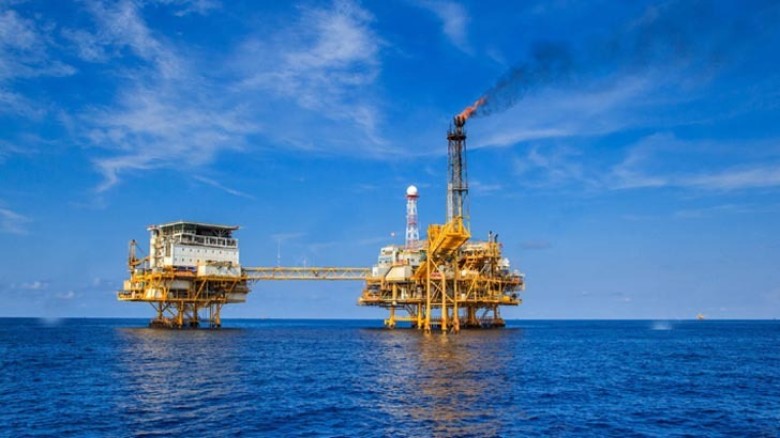
Oil and gas exploration in the Bay of Bengal, government emphasizes domestic production
Bangladesh has felt the energy crisis very well in the past few months due to the turbulent situation in the Middle East due to the Iran-US war. And from that bitter experience, the BNP government is now reorganizing the overall management to ensure energy security. Efforts to explore domestic gas have already begun to meet the country's growing energy demand and reduce dependence on expensive liquefied natural gas (LNG) imports.
Finance Minister Amir Khasru Mahmud Chowdhury recently announced the proposed budget for the fiscal year 2026-27. This sector has been given special priority in the proposed national budget. At the same time, a new offshore bidding round or international tender has been called after a long time to strengthen oil and gas exploration in the Bay of Bengal.
Finance Minister Amir Khasru Mahmud Chowdhury said in his budget speech that to strengthen the country's energy security, the government has taken initiatives to increase oil and gas exploration activities, increase domestic production, expand refining capacity and diversify import sources. He said that importance is being given to both onshore (land) and offshore (ocean) exploration and production of natural gas. In addition, the capacity of the state-owned exploration company Bangladesh Petroleum Exploration and Production Company Limited (Bapex) is being further increased.
According to government data, the total recoverable gas volume in the discovered gas fields of Bangladesh is about 29.74 trillion cubic feet (TCF). Of this, about 22.11 TCF of gas has been extracted. The remaining reserves are about 7.63 TCF, which is expected to be able to meet the country's demand for more than a decade at the current production rate. In this reality, the government has taken initiatives to explore new gas fields and increase the production of existing fields.
Bangladesh's energy sector is significantly dependent on imports. According to government data, about 95 percent of the country's petroleum products have to be imported from abroad. In addition, about 34 percent of the total gas demand is being met through LNG imports. Almost the entire demand for LPG is import-dependent. As a result, if prices increase or supply is disrupted in the international market, the country's energy sector comes under pressure.
According to Petrobangla sources, the activities of state-owned company Bapex have also been expanded in domestic gas exploration. Work has been completed in 26 wells under Petrobangla's ongoing well drilling and workover program. In addition, plans have been taken to drill 69 new wells and conduct workover activities in 31 wells from 2025-26 to 2027-28. Initiatives have also been taken to procure two new exploration rigs to further accelerate the exploration activities. At the same time, there are plans to conduct a 270-line kilometer geological survey, 700-line kilometer two-dimensional (2D) seismic survey and 700 square kilometer three-dimensional (3D) seismic survey.
International Tender Announcement
It is reported that some visible progress has also been achieved in the exploration activities. BAPEX has completed the collection of about 3600 line kilometers of 2D seismic data in Block-7 and Block-9 areas. In addition, preparations are underway to implement the 3D seismic survey activities of about 1450 square kilometers in the Habiganj, Bakhrabad and Meghna gas field areas.
As part of the domestic resource exploration, the government has recently announced a new international tender for oil and gas exploration in the Bay of Bengal. A total of 26 sea blocks have been opened for foreign companies under the 'Offshore Bidding Round-2026'. Out of these, 11 are shallow sea blocks and 15 are deep sea blocks. Some government information also mentions 27 blocks, which include 12 shallow and 15 deep sea blocks.
Bangladesh Oil, Gas and Mineral Resources Corporation (Petrobangla) Director (Operations and Mines) Engineer Md. Rafiqul Islam told Jago News, "We are emphasizing on domestic resource exploration. The work of drilling 150 new wells for gas exploration has been undertaken. In addition, new tenders have been invited for offshore oil and gas exploration. This initiative has been taken to ensure the efficient use of domestic resources. Our main objective is to reduce import dependence."
Energy experts say that if significant gas reserves are discovered in the offshore area, Bangladesh will be able to reduce import dependence in the long term. However, since deep sea exploration is expensive and risky, the government has amended the Production Sharing Contract (PSC) to attract international oil and gas companies. The new contract includes investment protection, the opportunity to sell gas to third parties, permission to export gas under certain conditions, and other financial incentives. Moreover, by increasing exploration activities in both onshore and offshore areas, it will be possible to discover new gas reserves, which will help ensure the country's energy security in the long term and also significantly reduce import costs.
Emphasis on attracting foreign investment
Those involved in the energy sector say that if domestic gas exploration activities are successful, not only will import dependence be reduced, but the overall economy will also benefit by reducing power generation costs, increasing the competitiveness of the industrial sector and saving foreign exchange. However, they are emphasizing on increasing the speed of exploration activities, using modern technology and attracting foreign investment.
Energy expert and retired professor of Bangladesh University of Engineering and Technology (BUET), Dr. Ijaz Hossain told Jago News that ensuring energy security is a
© All rights reserved: Daily Phultala Protidin
 Print
 Save